
[ad_1]
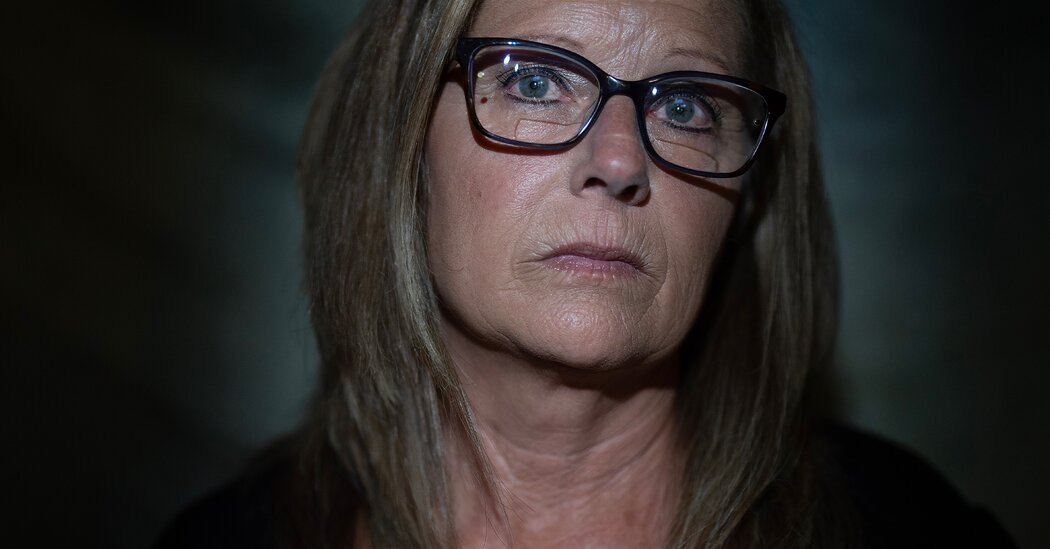
A journey implies leaving your home, traveling somewhere new and a change in the landscape, but often also a change in the traveler herself. When Flatt started on her journey in 2016, she was 49 and living with her husband and her mother, Joyce Lemons, in a large suburban house in Fort Worth. She had three grown children, and her husband, Cliff, had grown children of his own. She worked as a practice manager at a pediatric clinic and knew very little about the world she was about to enter, which was not only the world of law enforcement and criminal justice but also the increasingly monetized universe of true crime.
Flatt had been praying when, as she put it, “something was put heavy on my heart” telling her to find her sister’s killer. She is not an overly religious person, at least not by her own standards, but she has a knack for paying attention to signs — from God, she said, but perhaps also from her own intuition. It’s a personality trait she attributes to the early days after her sister’s murder, when, amid the chaos of mourning, she felt herself slipping into the background, watching others, her mother and father in particular, trying to make sense of the sea change.
Flatt knew the road ahead would be difficult — and she thought she knew why. After that prayer-born sign, she spent months practicing ways of feeling less emotionally attached to the subject at hand, which was the reality that Debbie had been killed. She worried about her mom, who moved in with her the year before after breaking a hip, and about buoying her hopes after decades without answers. She also worried about herself, specifically about looking at the evidence, including portions of the case file, which her parents obtained in the 1980s and stored in a secret location for years.
It’s relatively rare for a family to be given the police file from an unsolved murder — at least if that case is still considered open, which Debbie’s was; Flatt appreciated that, but it didn’t make looking through the file any easier. The first document she read was a report by the officer who arrived at the scene. Flatt read the description of what he found: Debbie’s body, a broken window, an unlocked porch door. She read the autopsy report detailing each stab wound and the list of collected evidence, and though she put it off, she eventually looked at the crime-scene photos as well.
After Flatt had read the entirety of the file, she picked up the phone and began making calls. She reached out to the Lubbock police first, and she eventually also talked to Debbie’s husband, Doug, now remarried and living in Missouri. She tracked down a contact for the nonprofit the Cold Case Foundation, and she gave an interview to The Avalanche-Journal. She talked to Strange, whose podcast features unsolved murders and missing-person cases in Texas, and she reached out to Remick, the former Lubbock reporter, as well as to another reporter from Lubbock, Phillip Hamilton, whom her parents grew close to during what Flatt now calls the Lucas years.
[ad_2]




Add comment